

Suchen
Sortierung
Beste Treffer Sortierung geschlossen
Beste Treffer
Titel: A-Z
Titel: Z-A
Preis aufsteigend
Preis absteigend
Erscheinungsdatum: aufsteigend
Erscheinungsdatum: absteigend
Ergebnis: 6475 Treffer
Entfernen 
Märchen, Sagen, Legenden

Hörbuch
Preis
0
0,99 €



Hörbuch
0
0
Preis
0,99 €
The Brothers Grimm, Jacob and Wilhelm, were German linguists and researchers of German folk
Weiterlesen

Hörbuch
Preis
0
0,99 €
Hörbuch
0
0
Preis
0,99 €
"The Valiant Little Tailor" is a fairy tale by the Brothers Grimm, included in the first edition of
Weiterlesen
Hörbuch
Preis
0
0,99 €
Hörbuch
0
0
Preis
0,99 €
"Oh, If I Could But Shiver!" is a German folktale collected by the Brothers Grimm. It is tale number 4 in the collection. It was also included by Andrew Lang in The Blue Fairy Book (1889). - The Grimms' first, 1812 edition contained a much shorter version, "Good Bowling and Card Playing". - It is classified as its own Aarne–Thompson index type 326 of a male protagonist's unsuccessful attempts to learn fear, which eventually leads to his awareness of mortality.A father had two sons. The younger, when asked by his father what he would like to learn to support himself, said he would like to learn to shudder. A sexton told the father that he could teach the boy. After teaching him to ring the church bell, he sent him one midnight to ring it and came after him, dressed as a ghost. The boy demanded an explanation. When the sexton did not answer, the boy, unafraid, pushed him down the stairs, breaking his leg...
Weiterlesen
Hörbuch
Preis
0
0,99 €
Hörbuch
0
0
Preis
0,99 €
"Little One-Eye, Two-Eyes, and Three-Eyes" is a German fairy tale collected by the Brothers Grimm,
WeiterlesenNeu

Hörbuch
Preis
0
0,99 €
Hörbuch
0
0
Preis
0,99 €
Periquín vivía con su madre, que era viuda, en una cabaña del bosque.
Como con el tiempo fue
Weiterlesen
Hörbuch
Preis
0
0,99 €
Hörbuch
0
0
Preis
0,99 €
"Little Bun Rabbit" is the twenty-second and final tale in L. Frank Baum's 1897 collection
Weiterlesen
Hörbuch
Preis
0
0,99 €
Hörbuch
0
0
Preis
0,99 €
"The Water of Life" is a German fairy tale collected by the Brothers Grimm, tale number 97.
A king
Weiterlesen
Hörbuch
Preis
0
0,99 €
Hörbuch
0
0
Preis
0,99 €
"Cinderella" is a folk tale embodying a myth-element of unjust oppression and triumphant reward.A rich man's wife became sick, and when she felt that her end was drawing near, she called her only daughter to her bedside and said, "Dear child, remain pious and good, and then our dear God will always protect you, and I will look down on you from heaven and be near you." With this she closed her eyes and died...
Weiterlesen
Hörbuch
Preis
0
0,99 €
Hörbuch
0
0
Preis
0,99 €
"Rapunzel" is a German fairy tale in the collection assembled by the Brothers Grimm, and first
Weiterlesen
Hörbuch
Preis
0
0,99 €
Hörbuch
0
0
Preis
0,99 €
The fairy tale "The Selfless Hare" by the Russian writer Mikhail Saltykov-Shchedrin, published in
Weiterlesen
Hörbuch
Preis
0
0,99 €
Hörbuch
0
0
Preis
0,99 €
Little Ida's Flowers is a short fantasy story for children by the Danish writer Hans
Weiterlesen
Hörbuch
Preis
0
0,99 €
Hörbuch
0
0
Preis
0,99 €
"The Three Little Men in the Wood" or "The Three Little Gnomes in the Forest" is a German fairy tale collected in 1812 by the Brothers Grimm.A woman offers her hand in marriage to a widower: in return, her daughter would wash and drink water, and the man's would wash with milk and drink wine. After performing a test to determine his choice, he marries the woman, who keeps her word. However, by the second day of marriage, both daughters bathe and wash with water. By the third, the man's daughter washes with and drinks water, while the woman's daughter drinks wine and washes with milk. It remains this way afterwards, because the woman secretly hates her step-daughter due to her being prettier than her own...
Weiterlesen
Hörbuch
Preis
0
0,99 €
Hörbuch
0
0
Preis
0,99 €
"Cinderilla, or The Little Glass Slipper" is a famous fairytale by French author Charles Perrault.
Weiterlesen
Hörbuch
Preis
0
0,99 €
Hörbuch
0
0
Preis
0,99 €
The Remarkable Rocket by Oscar Wilde was first published in 1888 in the anthology The Happy Prince
Weiterlesen
Hörbuch
Preis
0
0,99 €
Hörbuch
0
0
Preis
0,99 €
In the fairy tales of Ivan Yakovych Franko, under the guise of animals, people are ridiculed with
Weiterlesen
Hörbuch
Preis
0
0,99 €
Hörbuch
0
0
Preis
0,99 €
Once upon a time there was a little boy who had taken cold. He had gone out and got his feet wet;
Weiterlesen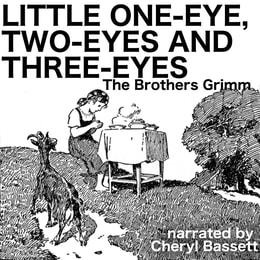
Hörbuch
Preis
0
0,99 €
Hörbuch
0
0
Preis
0,99 €
"Little One-Eye, Two-Eyes, and Three-Eyes" is a German fairy tale collected by the Brothers Grimm, tale number 130.A woman had three daughters: The eldest had one eye in the middle of her forehead, the second had two eyes like ordinary people, the third had three eyes; two on the sides of her head and a third in the middle of her forehead. Her mother and sisters scorned Little Two Eyes because she was like other people and treated her badly, leaving her only their leftovers to eat...
Weiterlesen
Hörbuch
Preis
0
0,99 €
Hörbuch
0
0
Preis
0,99 €
Cat and Mouse in Partnership is a Brothers Grimm fairy tale about a cat and a mouse. The cat
Weiterlesen
Hörbuch
Preis
0
0,99 €
Hörbuch
0
0
Preis
0,99 €
"The Poor Wolf" is a satirical fairy tale by Mikhail Saltykov-Shchedrin, first published in
Weiterlesen
Hörbuch
Preis
0
0,99 €
Hörbuch
0
0
Preis
0,99 €
"The Bear in the Voivodeship" is one of the "adult" fairy tales by Mikhail Saltykov-Shchedrin, a
Weiterlesen
Hörbuch
Preis
0
0,99 €
Hörbuch
0
0
Preis
0,99 €
"Frederick and Catherine" (also called "Freddy and Katy Lizzy") is a German fairy tale collected by the Brothers Grimm in Grimm's Fairy Tales, number 59.Frederick and Catherine were husband and wife. He left to do his work. She started to fry a sausage and thought she could get a beer while it cooked. In the cellar, drawing it, she realized the dog was loose and might eat the sausage, but the dog had already done so, and she chased it but could not catch it. Meanwhile, the keg of beer emptied itself into the cellar. To hide this, she used flour she bought at a fair to dry it. Frederick was furious hearing this...
Weiterlesen
Hörbuch
Preis
0
0,99 €
Hörbuch
0
0
Preis
0,99 €
"The Valiant Little Tailor" is a German fairy tale collected by the Brothers Grimm, tale number 20. Joseph Jacobs collected another variant "A Dozen at One Blow" in European Folk and Fairy Tales.A tailor is preparing to eat some jam, but when flies settle on it, he kills seven of them with one blow of his hand. He makes a belt describing the deed, reading "Seven at One Blow". Inspired, he sets out into the world to seek his fortune. The tailor meets a giant who assumes that "Seven at One Blow" refers to seven men. The giant challenges the tailor. When the giant squeezes water from a boulder, the tailor squeezes milk, or whey, from cheese. The giant throws a rock far into the air, and it eventually lands. The tailor counters the feat by tossing a bird that flies away into the sky; the giant believes the small bird is a "rock" which is thrown so far that it never lands. Later, the giant asks the tailor to help him carry a tree. The tailor directs the giant to carry the trunk, while the tailor will carry the branches. Instead, the tailor climbs on, so the giant carries him as well, but it appears as if the tailor is supporting the branches...
Weiterlesen
Hörbuch
Preis
0
0,99 €
Hörbuch
0
0
Preis
0,99 €
"The Little Match Girl" (Danish: Den Lille Pige med Svovlstikkerne, meaning "The little girl with
Weiterlesen
Hörbuch
Preis
0
0,99 €
Hörbuch
0
0
Preis
0,99 €
"Master Cat, or Puss in Boots" is one of the most famous fairy tales of the French writer Charles
Weiterlesen
Hörbuch
Preis
0
0,99 €
Hörbuch
0
0
Preis
0,99 €
"The Frog Prince" or "Iron Henry" is a fairy tale, best known through the Brothers Grimm's written
Weiterlesen
Hörbuch
Preis
0
0,99 €
Hörbuch
0
0
Preis
0,99 €
An evil shape-shifting witch lived alone in a dark castle in the woods. She could lure wild animals
Weiterlesen
Hörbuch
Preis
0
0,99 €
Hörbuch
0
0
Preis
0,99 €
"The Emperor's New Clothes" (Danish: Kejserens nye Klæder) is a short tale written by Danish author
Weiterlesen
Hörbuch
Preis
0
0,99 €
Hörbuch
0
0
Preis
0,99 €
"The Goose Girl" is a German fairy tale from the collection of the Brothers Grimm. It was first
Weiterlesen
Hörbuch
Preis
0
0,99 €
Hörbuch
0
0
Preis
0,99 €
"Snow-White and Rose-Red" is a German fairy tale. The best-known version is the one collected by
Weiterlesen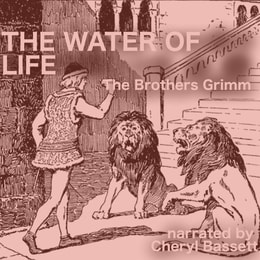
Hörbuch
Preis
0
0,95 €
Hörbuch
0
0
Preis
0,95 €
"The Water of Life" is a German fairy tale collected by the Brothers Grimm, tale number 97.A king was dying. An old man told his sons that the water of life would save him. Each one set out in turn. The two older ones, setting out in hopes of being the heir, were rude to a dwarf on the way and became trapped in ravines. When the youngest son went the dwarf asked where he was going, and he told him. The dwarf told him it was in a castle, and gave him an iron wand to open the gates and two loaves to feed to the lions inside. Then he had to get the water before the clock struck 12 when the gates would shut again...
Weiterlesen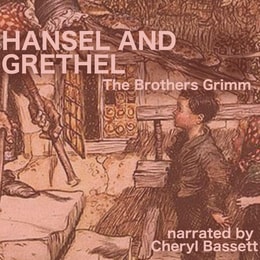
Hörbuch
Preis
0
0,95 €
Hörbuch
0
0
Preis
0,95 €
"Hansel and Grethel" is a well-known fairy tale of German origin, recorded by the Brothers Grimm and published in 1812. Hansel and Grethel are a young brother and sister kidnapped by a cannibalistic witch living in a forest, in a house constructed of cake, confectionery, candy, and many more treats than are imaginable. The two children escape with their lives by outwitting her.The story is set in medieval Germany. Hansel and Grethel are the children of a poor woodcutter. When a famine settles over the land, the woodcutter's wife decides to take the children into the woods and leave them there to fend for themselves, so that she and her husband do not starve to death. The woodcutter opposes the plan but finally reluctantly submits to his wife's scheme. They were unaware that in the children's bedroom, Hansel and Grethel have overheard them. After the parents have gone to bed, Hansel sneaks out of the house and gathers as many white pebbles as he can , then returns to his room, reassuring Grethel that God will not forsake them...
Weiterlesen
Hörbuch
Preis
0
0,95 €
Hörbuch
0
0
Preis
0,95 €
"Frederick and Catherine" (also called "Freddy and Katy Lizzy") is a German fairy tale collected by the Brothers Grimm in Grimm's Fairy Tales, number 59.Frederick and Catherine were husband and wife. He left to do his work. She started to fry a sausage and thought she could get a beer while it cooked. In the cellar, drawing it, she realized the dog was loose and might eat the sausage, but the dog had already done so, and she chased it but could not catch it. Meanwhile, the keg of beer emptied itself into the cellar. To hide this, she used flour she bought at a fair to dry it. Frederick was furious hearing this...
Weiterlesen
Hörbuch
Preis
0
0,95 €
Hörbuch
0
0
Preis
0,95 €
"Rapunzel" is a German fairy tale in the collection assembled by the Brothers Grimm, and first published in 1812 as part of Children's and Household Tales.A lonely couple, who wants a child, lives next to a walled garden belonging to an evil witch named Dame Gothel. The wife, experiencing the cravings associated with the arrival of her long-awaited pregnancy, notices some rapunzel, growing in the garden and longs for it. She refuses to eat anything else and gets sick, and the husband begins to fear for her life. One night, her husband breaks into the garden to get some for her...
Weiterlesen
Hörbuch
Preis
0
0,95 €
Hörbuch
0
0
Preis
0,95 €
"Thumbling" is a German fairy tales collected by the Brothers Grimm.There was once a poor peasant who sat in the evening by the hearth and poked the fire, and his wife sat and span. Then said he, "How sad it is that we have no children! With us all is so quiet, and in other houses it is noisy and lively."
Weiterlesen
Hörbuch
Preis
0
0,95 €
Hörbuch
0
0
Preis
0,95 €
"The Story of a Mother" (Danish: Historien om en moder) is a story by the Danish poet, travel writer, short story writer, and novelist Hans Christian Andersen (1805-1875). The tale was first published December 1847. The story has been made into films several times, and also adapted into an animated film using the stop-motion puppet technique.A mother has not slept for three days and nights watching over her sick child. When she closes her eyes for just a moment, Death comes and takes her child. The mother rushes into the street and asks a woman, who is Night, which way Death went. Night tells her to go into the forest, but first the mother must sing every lullaby that she has ever sung for her child. In the forest, a thorn bush tells her which way to continue, but only after she has warmed the bush by pressing it to her chest, causing her to bleed. The mother then reaches a lake that carries her across in exchange for her eyes, which she cries out...
Weiterlesen
Hörbuch
Preis
0
0,95 €
Hörbuch
0
0
Preis
0,95 €
"Cinderella" is a folk tale embodying a myth-element of unjust oppression and triumphant reward.A rich man's wife became sick, and when she felt that her end was drawing near, she called her only daughter to her bedside and said, "Dear child, remain pious and good, and then our dear God will always protect you, and I will look down on you from heaven and be near you." With this she closed her eyes and died...
Weiterlesen
Hörbuch
Preis
0
0,95 €
Hörbuch
0
0
Preis
0,95 €
"Mother Holle" is a German fairy tale that comes from the book "Children's and Household Tales" collected by Jacob and Wilhelm Grimm. Mother Holle is the 24th story in the first volume of the book published in 1812 as part of Children's and Household Tales.A rich widow lives with her daughter and her stepdaughter. The widow favored her younger biological daughter allowing her to become spoiled and idle while her older stepdaughter was left to do all the work. Every day the stepdaughter would sit outside the cottage and spin beside the well...
Weiterlesen
Hörbuch
Preis
0
0,95 €
Hörbuch
0
0
Preis
0,95 €
The Red Shoes" (Danish: De røde sko) is a fairy tale by Danish poet and author Hans Christian Andersen first published by C.A. Reitzel in Copenhagen 7 April 1845 in New Fairy Tales. First Volume. Third Collection. 1845. (Nye Eventyr. Første Bind. Tredie Samling. 1845.). Other tales in the volume include "The Elf Mound" (Elverhøi), "The Jumpers" (Springfyrene), "The Shepherdess and the Chimney Sweep" (Hyrdinden og Skorstensfejeren), and "Holger Danske" (Holger Danske).The tale was republished 18 December 1849 as a part of Fairy Tales. 1850. (Eventyr. 1850.) and again on 30 March 1863 as a part of Fairy Tales and Stories. Second Volume. 1863. (Eventyr og Historier. Andet Bind. 1863.). The story is about a girl forced to dance continually in her red shoes. "The Red Shoes" has seen adaptations in various media including film...A peasant girl named Karen is adopted by a rich old lady after her mother's death and grows up vain and spoiled. Before her adoption, Karen had a rough pair of red shoes; now she has her adoptive mother buy her a pair of red shoes fit for a princess. Karen is so enamored of her new shoes that she wears them to church, but the old lady scolds her: it's highly improper and she must only wear black shoes in church from now on. But next Sunday, Karen cannot resist the urge to put the red shoes on again. As she is about to enter the church, she meets a mysterious old soldier with a red beard. "Oh, what beautiful shoes for dancing," the soldier says. "Never come off when you dance," he tells the shoes, and he taps the sole of each with his hand...
Weiterlesen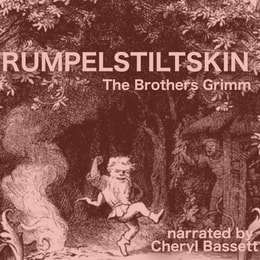
Hörbuch
Preis
0
0,95 €
Hörbuch
0
0
Preis
0,95 €
"Rumpelstiltskin" is a fairytale popularly associated with Germany (where he is known as Rumpelstilzchen). The tale was one collected by the Brothers Grimm in the 1812 edition of Children's and Household Tales.In order to appear superior, a miller lies to the king, telling him that his daughter can spin straw into gold (some versions make the miller's daughter blonde and describe the "straw-into-gold" claim as a careless boast the miller makes about the way his daughter's straw-like blond hair takes on a gold-like lustre when sunshine strikes it). The king calls for the girl, shuts her in a tower room filled with straw and a spinning wheel, and demands she spin the straw into gold by morning or he will cut off her head (other versions have the king threatening to lock her up in a dungeon forever)...
Weiterlesen
Hörbuch
 Autor*in unbekannt
Preis
0
0,95 €
Hörbuch
Autor*in unbekannt0
0
Preis
0,95 €
?????????????????????????????????????????????????????? ????????????????????????? ?????????????????????????? ??????????????????????????????????????????????????????? ?????????????????????????????? ????????????????????????????????????????????????????? ???????????????????????????????????????? ??????????????????????? ??? "???????????" ??? "????????????" ??????????????????????????
Weiterlesen
Hörbuch
Preis
0
0,95 €
Hörbuch
0
0
Preis
0,95 €
"The Frog Prince" or "Iron Henry" is a fairy tale, best known through the Brothers Grimm's written version; traditionally it is the first story in their collection. - Although the story is best known today through the Grimm Brothers' rendition of it, parts of it may extend back until at least Roman times; a version of the story is apparently referred to in Petronius's Satyricon, in which the character Trimalchio remarks that, "qui fuit rana nunc est rex" ("The man who was once a frog is now a king."). Other scholars, however, argue that this may actually be a jab at the emperor Nero, who was often mockingly compared to a frog.In the tale, a spoiled princess reluctantly befriends the Frog Prince (meeting him after dropping a gold ball into a pond), who magically transforms into a handsome prince. Although in modern versions the transformation is invariably triggered by the princess kissing the frog, in the original Grimm version of the story the frog's spell was broken whenthe princess threw it against a wall in disgust...
Weiterlesen
Hörbuch
Preis
0
0,95 €
Hörbuch
0
0
Preis
0,95 €
Once upon a time there was a little boy who had taken cold. He had gone out and got his feet wet; though nobody could imagine how it had happened, for it was quite dry weather. So his mother undressed him, put him to bed, and had the tea-pot brought in, to make him a good cup of Elderflower tea. Just at that moment the merry old man came in who lived up a-top of the house all alone; for he had neither wife nor children--but he liked children very much, and knew so many fairy tales, that it was quite delightful...
Weiterlesen
Hörbuch
Preis
0
0,95 €
Hörbuch
0
0
Preis
0,95 €
Ah! yes, that was little Tuk: in reality his name was not Tuk, but that was what he called himself before he could speak plain: he meant it for Charles, and it is all well enough if one does but know it. He had now to take care of his little sister Augusta, who was much younger than himself, and he was, besides, to learn his lesson at the same time; but these two things would not do together at all. There sat the poor little fellow, with his sister on his lap, and he sang to her all the songs he knew; and he glanced the while from time to time into the geography-book that lay open before him. By the next morning he was to have learnt all the towns in Zealand by heart, and to know about them all that is possible to be known...
Weiterlesen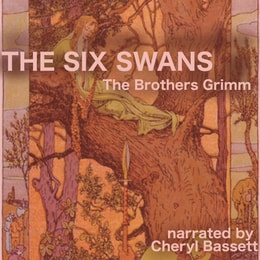
Hörbuch
Preis
0
0,95 €
Hörbuch
0
0
Preis
0,95 €
The Six Swans is a German fairy tale collected by the Brothers Grimm as tale number 49.A King gets lost in a forest, and an old woman helps him, on the condition that he marry her beautiful daughter. The King has a bad feeling about this but accepts anyway. He has six sons and a daughter from his first marriage, however, and fears that the children will be targeted by his new wife; so he sends them away and visits them in secret...
Weiterlesen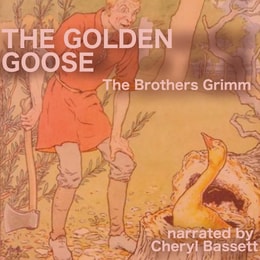
Hörbuch
Preis
0
0,95 €
Hörbuch
0
0
Preis
0,95 €
"The Golden Goose" is a fairy tale collected by the Brothers Grimm (Tale 64).The hero is the youngest of three brothers, given the nickname Simpleton. His eldest brother is sent into the forest to chop wood, fortified with a rich cake and a bottle of wine. He meets a little gray man who begs a morsel to eat and a swallow of wine but is rebuffed. The eldest brother injures his arm felling a tree and is taken home. The second brother meets a similar fate. Simpleton, sent out with a burned biscuit cooked in the ashes of the hearth and soured beer, is generous with the little old man and is rewarded with a golden goose. The goose has been discovered within the roots of the tree chosen by the little gray man and felled by Simpleton...
Weiterlesen
Hörbuch
Preis
0
0,95 €
Hörbuch
0
0
Preis
0,95 €
"Snow-White and Rose-Red" is a German fairy tale. The best-known version is the one collected by the Brothers Grimm as tale number 161.Snow-White and Rose-Red are two little girls living with their mother, a poor widow, in a small cottage by the woods. Fair-haired Snow-White is quiet and shy and prefers to spend her time indoors, doing housework and reading. Dark-haired Rose-Red is outspoken, lively and cheerful, and prefers to be outside. They are both very good little girls who love each other and their mother dearly, and their mother is very fond of them as well...
Weiterlesen
Hörbuch
Preis
0
0,95 €
Hörbuch
0
0
Preis
0,95 €
There was once a fine gentleman, all of whose moveables were a boot-jack and a hair-comb: but he had the finest false collars in the world; and it is about one of these collars that we are now to hear a story. – It was so old, that it began to think of marriage; and it happened that it came to be washed in company with a garter...
Weiterlesen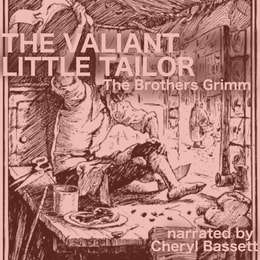
Hörbuch
Preis
0
0,95 €
Hörbuch
0
0
Preis
0,95 €
"The Valiant Little Tailor" is a German fairy tale collected by the Brothers Grimm, tale number 20. Joseph Jacobs collected another variant "A Dozen at One Blow" in European Folk and Fairy Tales.A tailor is preparing to eat some jam, but when flies settle on it, he kills seven of them with one blow of his hand. He makes a belt describing the deed, reading "Seven at One Blow". Inspired, he sets out into the world to seek his fortune. The tailor meets a giant who assumes that "Seven at One Blow" refers to seven men. The giant challenges the tailor. When the giant squeezes water from a boulder, the tailor squeezes milk, or whey, from cheese. The giant throws a rock far into the air, and it eventually lands. The tailor counters the feat by tossing a bird that flies away into the sky; the giant believes the small bird is a "rock" which is thrown so far that it never lands. Later, the giant asks the tailor to help him carry a tree. The tailor directs the giant to carry the trunk, while the tailor will carry the branches. Instead, the tailor climbs on, so the giant carries him as well, but it appears as if the tailor is supporting the branches...
Weiterlesen
Hörbuch
Preis
0
0,95 €
Hörbuch
0
0
Preis
0,95 €
"Little Snow-White" is a 19th-century German fairy tale which is today known widely across the Western world. The Brothers Grimm published it in 1812 in the first edition of their collection Grimms' Fairy Tales. It was titled in German: "Schneewittchen" numbered as Tale 53. The name Schneewittchen was Low German and in the first version it was translated with Schneeweißchen. The Grimms completed their final revision of the story in 1854.The fairy tale features such elements as the magic mirror, the poisoned apple, the glass coffin, and the characters of the evil queen and the Seven Dwarfs. The seven dwarfs were first given individual names in the 1912 Broadway play Snow White and the Seven Dwarfs and then given different names in Walt Disney's 1937 film Snow White and the Seven Dwarfs.
Weiterlesen
Hörbuch
Preis
0
0,95 €
Hörbuch
0
0
Preis
0,95 €
In the street, up there, was an old, a very old house-it was almost three hundred years old, for that might be known by reading the great beam on which the date of the year was carved: together with tulips and hop-binds there were whole verses spelled as in former times, and over every window was a distorted face cut out in the beam. The one story stood forward a great way over the other; and directly under the eaves was a leaden spout with a dragon's head; the rain-water should have run out of the mouth, but it ran out of the belly, for there was a hole in the spout...
Weiterlesen